Author: Wendy Clark

  • FOMB Seeks Executive Director

    [vc_row][vc_column][vc_column_text css=””]Merrymeeting Bay is a freshwater tidal estuary of international significance, known for its populations of rare plants, diadromous fish, and migratory waterfowl.

    Friends of Merrymeeting Bay seeks an Executive Director; a passionate activist, with deep love of this place to grow with our group into the future. FOMB is the only organization in Maine taking a holistic approach to environmental work; mixing research, advocacy, education and land conservation. We are an active, membership-driven grassroots environmental non-profit dedicated to the preservation, protection, and enhancement of this unique ecosystem and those that relate to it.

    The successful applicant will be passionate about our mission and the strategies (including litigation) therein. You must be able to work efficiently and independently from a home office and or ours, recognize priorities and work under the direction of the Steering Committee overall and the Chair in particular. Applicant should live in or be willing to relocate to the Bay area and be eager to learn.

    Candidates should be experienced in grassroots organizing, foundation and non-foundation fundraising, volunteer outreach and administrative tasks. Experience in land protection, advocacy, research, and education is very desirable. Database management (Excel and Access) competence as well as excellent writing and verbal skills are essential.

    This is a full-time position. Salary is commensurate with experience and qualifications. Benefits include a flexible work schedule, sick and vacation policy, and additional contribution towards health care. Some evening and weekend work is required. Passion for the work and the environment are key.

    Application

    Send resume, three references, and two writing samples. One writing sample should be a hypothetical Letter of Interest (LOI) submitted to FOMB considering us as a potential grantor. Your LOI proposal should be for protection of some conservation land or for a dam you want to remove. The second sample is your choice. Remit to Ed Friedman at Friends of Merrymeeting Bay, P.O. Box 233, Richmond, ME, 04357 or email to edfomb@comcast.net . Position closes when suitable candidate is hired. Electronic submissions are preferred. Questions can be directed to Ed at 207-666-3372.

    Executive Director, Friends of Merrymeeting Bay Job Description

    Candidates should be experienced in foundation and non-foundation fundraising, grassroots organizing, and outreach, administrative tasks. Experience in land protection, advocacy, research, and education is also desirable. This is a full-time position. Salary is commensurate with experience. Benefits include a flexible work schedule, sick and vacation policy, and additional contribution towards health care. Some evening and weekend work is required.

    The successful applicant will be passionate about our holistic mission and the strategies therein. You must be able to work efficiently and independently from a home office and or our office and work initially under the direction of the Steering Committee overall and the Chair in particular. Applicant should live in or be willing to relocate to the Bay area. Database management (Excel & Access) as well as excellent writing and verbal skills are essential. Knowledge of HTML and Adobe InDesign will be helpful.

    Organizing:

    • Increase volunteer participation by identifying and developing opportunities for members to get involved in FOMB’s work. This is central to all of the ED’s work. The ability to train volunteers in all aspects of our work and involve the membership base is critical.
    • Any activity that can be successfully accomplished by volunteers should be.
    • Developing positive relationships with FOMB members and members of the community to strengthen involvement in various FOMB committees, projects and programs.
    • Recruit, oversee, train, and provide recognition for volunteers.
    • Extend visibility of FOMB’s work in the community through positive outreach.

    Fundraising:

    • ED is expected to raise his or her salary equivalent yearly. This money does not need to be specifically designated for salary, but can be designated for any of FOMB’s project work. It does not include normal renewals or annual appeal income but does include new major donor donations.
    • Explore and secure capacity building grants as well as grants for specific program (e.g., the Current Study, Bay Day, the archaeological dig, internships, advocacy) work.
    • Coordinate major donor program and do major donor visits as appropriate.
    • Cultivate major donors
    • Explore and implement other fundraising opportunities (e.g., house parties, auctions, special events or projects).
    • Oversee Annual Appeal and renewals.

    Administrative:

    • Database management in an Access database and Excel spreadsheets, (regular merge mail membership mailings, annual appeal, newsletters, database updates). Improve tracking of information such as volunteer hours and activities, and contributions.
    • Mass e-mailings in Vertical Response.
    • Oversee publication of 4 newsletter issues per year.
    • Attend regular Board (SC) meetings, and sub-committee meetings supporting these groups as directed.
    • Coordinate maintenance of website.
    • Answer general queries from the public or from members about any of FOMB’s programs (or field to the appropriate party).
    • Organize, maintain, and update FOMB paperwork, permits and licenses.
    • Maintain and submit weekly time logs of work performed. Program work
    • Support Board and Committees as directed to keep projects moving forward. This requires relatively detailed knowledge and understanding of FOMB’s work in its four major program areas (Research & Advocacy, Membership & Fundraising, Education, and Conservation & Stewardship).
    • Coordinate school outreach program. Work with Education sub-committee to expand program providing existing program is running smoothly. Estimated 25% of full time position (pre-Covid).
    • Assist with coordination of Summer Outings, Speaker Series, Bay Day, and any other FOMB events as needed.
    • Assist with water quality program as directed. Coordinate recording, and analyses of basic WQ data.
    • Assist with coordination and implementation of easements and landowner outreach as time and experience allow.
    • Assist with coordination and implementation of research and advocacy as time and experience allow.
    • Staff will be expected to take over the above program work over time.

    Priorities

    • Fundraising.
    • Strengthening sub-committees and organization through member/community outreach and volunteer organizing. Volunteers, volunteers, volunteers!
    • Administrative duties.
    • Education program running smoothly.
    • Transition program work responsibilities from Chair.

    [/vc_column_text][/vc_column][/vc_row]
  • Speaker Series: James Madison Kendall’s Wonderful Water Wheel

    Speaker Series: James Madison Kendall’s Wonderful Water Wheel

    [vc_row][vc_column width=”2/3″][vc_column_text css=””]Friends of Merrymeeting Bay’s (FOMB) second presentation of their 28th annual Winter Speaker Series, James Madison Kendall’s Wonderful Water Wheel features raconteur Bud Warren, maritime historian and co-founder of the Tide Mill Institute. Winter Speaker Series presentations are again being held via Zoom and are accessible via hyperlink at the top of the FOMB web page: www.fomb.org. This event takes place Wednesday, November 13th at 7 pm.

    It was huge. It was unique. And this mill operated successfully for decades under the Cathance River Bridge in Bowdoinham.  It was the creation of James Madison Kendall, born in 1816 to a milling family in Fairfield and dying in 1905 at 88 in Bowdoinham. This mill provided power for the Kendall Plaster and Grain Mills and Sagadahoc Fertilizer Company for well over 40 years. Today there’s little trace of it left.  This is the tale of an unusual tide mill, enhanced by historical documents and photographs.[/vc_column_text][vc_column_text css=””]
    Massive driveshaft for two sash-type (up-down) saws[/vc_column_text][vc_column_text css=””]Bud Warren is a popular lecturer, raconteur and co-founder and former president of the Tide Mill Institute which now has a subcommittee studying this evening’s peculiar bit of Maine’s coastal industrial history. A native of the coast, Warren knows Maine well. For nearly forty years he’s led heritage tours of the area for Smithsonian Associates, the National Trust for Historic Preservation, Road Scholar and other significant groups. He’s studied, written and lectured about the region’s maritime history, its geography, its environment and culture. Bud works by poking behind the scenes to understand Maine’s people and their way of life and then finding ways to share that appreciation with visitors. A former resident of the mid-coast, he now will be coming to us live from the wilds of Millinocket.

    FOMB hosts their Winter Speaker Series October-May, on the second Wednesday of each month. Due to the Covid 19 pandemic and ability for participants to attend from out of the area, the series continues via Zoom. The FOMB December 11th presentation: Our Town! Adventures in Richmond History, features the Piti Theatre Company and Marcia Buker Elementary School’s 4th grade classes of 2023-2024. This event takes place at 7:00 pm with the Zoom registration link available at www.fomb.org a week or so prior to the presentation.

    Speaker Series presentations are free, open to the public. Visit www.fomb.org to see speaker biographies, full event schedules, video recordings of past presentations, become a member, and learn more about how you can help protect beautiful Merrymeeting Bay and the Gulf of Maine.[/vc_column_text][vc_video link=”https://www.youtube.com/watch?v=WjasOLH23tc” css=”” title=”Watch the Presentation”][/vc_column][vc_column width=”1/3″][vc_column_text css=””]
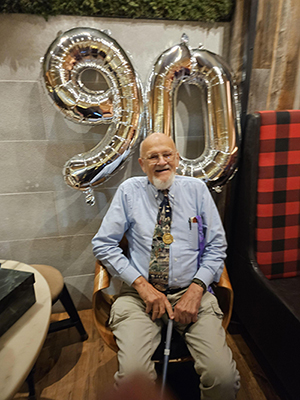
    Bud Warren celebrating 90th Birthday[/vc_column_text][/vc_column][/vc_row]

  • Speaker Series: Blinded by the Light Perils & Pitfalls of LEDs

    Speaker Series: Blinded by the Light Perils & Pitfalls of LEDs

    [vc_row][vc_column width=”2/3″][vc_column_text css=””]Speaker Mark Baker, Founder and President of the Soft Lights Foundation

    Original presentation: October 9, 2024

    Friends of Merrymeeting Bay’s (FOMB) first presentation of their 28th annual Winter Speaker Series, Blinded by the Light-Perils & Pitfalls of LED’s features Mark Baker, founder and president of the Soft Lights Foundation. Winter Speaker Series presentations are again being held via Zoom and are accessible via hyperlink at the top of the FOMB web page: www.fomb.org. This event takes place Wednesday, October 9th at 7 pm.

    Mark’s presentation covers the topic of electromagnetic radiation and the impacts of Light Emitting Diodes on human and environmental health.  He will discuss the physics of LEDs, the impacts of artificial light on biological systems, the reports of harm from exposure to LED light, and the legal and regulatory structure for LED products. You will learn what makes this type of lighting different as well as blinding, why claims of LED efficiency are misleading and why this light causes most of us to at least avert our eyes and for some of us, even stimulates seizures.

    Most recently, on September 23rd 2024, Baker filed a lawsuit against the US Food and Drug Administration and US National Highway Traffic Safety Administration (NHTSA) for failing to protect the public from hazardous and dangerous LED headlights. (https://www.softlights.org/wp-content/uploads/2024/09/Mark-Baker-v-FDA-NHTSA_Filed.pdf) Over 60,000 individuals have signed a public petition to ban blinding headlights. (https://www.change.org/p/u-s-dot-ban-blinding-headlights-and-save-lives).  Members of the public have submitted over 200 pages of comments to NHTSA describing the debilitating and often life-threatening impacts of LED headlights. (https://www.softlights.org/wp-content/uploads/2024/04/Petition-Comments-2024.pdf).   Mr. Baker’s lawsuit seeks to compel the FDA and NHTSA to collaborate and cooperate, as required by law, to address the LED headlight crisis.

    Mark Baker has a Bachelor of Science in Electrical Engineering from the University of California, Santa Barbara.  He was a computer programmer for 20+ years and a middle school math teacher for over 10 years.  Mark has been involved in the effort to protect people from LED light since 2016 and founded the Soft Lights Foundation as a 501(c)(3) non-profit registered in the state of Oregon in 2021. This foundation is now one of the world’s leading advocacy groups protecting people from the harms of Visible Light radiation emitted by Light Emitting Diodes and for the protection of the natural night as a resource.

    FOMB hosts their Winter Speaker Series October-May, on the second Wednesday of each month. Due to the Covid 19 pandemic and ability for participants to attend from out of the area, the series continues via Zoom. The FOMB November 13th presentation: James Madison Kendall’s Wonderful Water Wheel!, features co-founder of the Tide Mill Institute, Bud Warren. This event takes place at 7:00 pm with the Zoom registration link available at www.fomb.org a week or so prior to the presentation.

    [/vc_column_text][vc_video link=”https://www.youtube.com/watch?v=92D7_74p0qQ” css=”” title=”Watch the Presentation”][/vc_column][vc_column width=”1/3″][vc_column_text css=””]

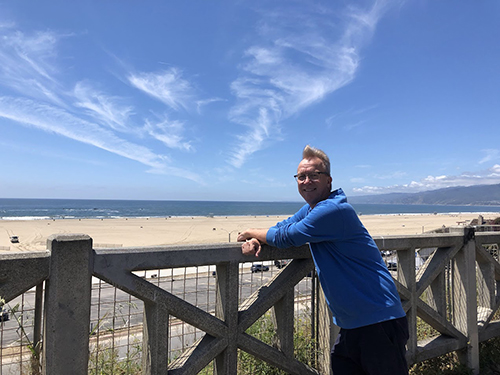
    Mark Baker
    Founder and President of the Soft Lights Foundation

    [/vc_column_text][/vc_column][/vc_row]
  • Archaeology & Conservation Easement Finalized

    Archaeology & Conservation Easement Finalized

    [vc_row][vc_column width=”2/3″][vc_column_text css=””]

    Dresden Falls Conservation Easement Finalized

    After about six years effort the final Dresden Falls or Houdlette archaeology parcel was transferred to The Archaeological Conservancy [TAC] on September 25th. Friends of Merrymeeting Bay [FOMB] led efforts to protect the property and retained a 4 acre section of the archaeological and high value habitat site until a conservation easement could be completed for the entire approximately 31 acres most of which was conveyed to TAC a couple of years ago. This site is considered the most important prehistoric archaeological site in Maine and also has the largest stand of the rare plant spongy arrowhead seen in the Bay area.

    Between 4,500 and 9,000 years ago, when river levels were lower than now and rising, there probably was a major rapids or waterfall at Goodwin Narrows across from the northern end of Little Swan Island in the Kennebec. With the falls hampering anadromous fish runs; native Americans developed a major seasonal fishing camp on this adjacent site. The Dresden site is reported to be the largest and most intensively occupied site of its age known in the State of Maine, and has produced more stone tools than any other Early to Middle Archaic site in New England.

    The 4 acre section FOMB retained until now contains the high ground overlooking portions of the Dresden site with confirmed intact prehistoric archaeological features. This section also contains confirmed intact 18th century archaeological features, and historical maps show several structures on the property at the time of the Revolutionary War. Had FOMB not intervened, the site would have been developed into an 8 home subdivision.

    While The Archaeological Conservancy will own the entire property, the FOMB easement protects conservation and archaeological values. Additionally, the Maine Historic Preservation Commission holds a Preservation Agreement on about 60% of the property. Two grants from the Land for Maine’s Future program helped the acquisition and the parcel is open to non-motorized use by the public. No disturbance of the land surface is permitted.

    “Protecting this property was a long-term goal for FOMB and a major accomplishment”, said Ed Friedman, Chairman of FOMB. “With protection, substantial benefits accrue for Bay communities, state and federal agencies and anyone with wildlife and archaeological interests. The Archaeological Conservancy, Maine Historic Preservation Commission, Land for Maine’s Future and individual donors and grantors all worked together with FOMB to make this possible.”[/vc_column_text][/vc_column][vc_column width=”1/3″][vc_column_text css=””]Dresden conservation
    Photo by Point of View Helicopter Services[/vc_column_text][/vc_column][/vc_row]

  • FOMB makes the Press Herald front page!

    [vc_row][vc_column][vc_column_text css=””]This is a sample post. Lorem ipsum dolor sit amet, consectetur adipiscing elit. Ut elit tellus, luctus nec ullamcorper mattis, pulvinar dapibus leo. Lorem ipsum dolor sit amet, consectetur adipiscing elit. Ut elit tellus, luctus nec ullamcorper mattis, pulvinar dapibus leo.[/vc_column_text][/vc_column][/vc_row]

  • MPBN on Merrymeeting Bay

    MPBN on Merrymeeting Bay

    [vc_row][vc_column][vc_row_inner][vc_column_inner width=”2/3″][vc_column_text css=””]Merrymeeting Bay is a unique inland freshwater river delta and the largest staging ground for migratory waterfowl in the Northeast.

    Formed by the confluence of six rivers, Merrymeeting Bay drains almost 40% of Maine’s fresh water into the Gulf of Maine through Chop Point.[/vc_column_text][/vc_column_inner][vc_column_inner width=”1/3″][/vc_column_inner][/vc_row_inner][vc_video link=”https://www.youtube.com/watch?v=MRM3gqL8H20″ css=””][/vc_column][/vc_row]

  • PFAS Lab, Northeastern University FOMB Merrymeeting Bay Report

    [vc_row][vc_column][vc_column_text css=””]New tests by Friends of Merrymeeting Bay found 19 PFAS in watersheds, with highest levels near Brunswick Naval Air Station, one at 922 ppt — far above EPA safety.

    Download the report[/vc_column_text][/vc_column][/vc_row]

  • Coalition Calls for End to Endangered Species Loophole

    [vc_row][vc_column][vc_column_text css=””]Contact: Emily Bastian, National Vice-Chair, Native Fish Coalition: info@nativefishcoalition.org 207-965-5098 Ed Friedman, Chairman, Friends of Merrymeeting Bay: edfomb@comcast.net 207-666-3372

    A coalition of 19 organizations and 10 prominent scientists and conservationists, including many former state employees, are supporting a bill that would ensure protections for all federally-listed threatened and endangered species found in Maine. LD883: An Act to Protect Endangered Species Whose Life Cycles Include Maine Land or Waters would require the Commissioners of Inland Fisheries and Wildlife (IFW) and Marine Resources (DMR) to recommend state listing for all species of fish and wildlife listed as Threatened or Endangered pursuant to the U.S. Endangered Species Act of 1973, and which inhabit land or waters in this state for any part of their life cycles. The proposed legislation covers all federally listed terrestrial and marine animal species, including birds, mammals, reptiles, amphibians, fish, and invertebrates. The purpose of the U.S. Endangered Species Act (ESA) is to protect and recover imperiled native species and the ecosystems they depend on to prevent their extinction. Under the ESA, “Threatened” refers to species likely to become endangered within the foreseeable future, and “Endangered” means a species in danger of extinction throughout all or a significant portion of its range. “Wildlife extinctions world-wide are at an all-time high” said Senator David Miramant, sponsor of the bill. “We hope LD 883 will close some management loopholes in Maine and help bring a number of our species back from the brink,” he added. Maine is one of only ten states (and the only one in the northeast) that does not mandate or recommend state-level listing of federally-listed species. “From 1979 to 1996, Maine’s definition of “Endangered” under the Maine Endangered Species Act (MESA) included federally-listed species. In 1996, LD 164 took responsibility for listing away from scientists and gave it to the commissioners of IFW and DMR and the legislature. Twenty-five years later it’s time we gave it back,” said Ed Friedman, Friends of Merrymeeting Bay Chairman. There are currently 16 federally-listed Threatened and Endangered birds, mammals, reptiles, and fish found in Maine. Of those, only ten, or 60%, are listed at the state level. The six federally-listed species found in Maine that are not listed at the state level include the red knot, Canada lynx, blue whale, green turtle, Atlantic salmon, and Atlantic sturgeon. Dwayne Shaw, Executive Director of the Downeast Salmon Federation noted Atlantic salmon are one imperiled species falling through the cracks in management and recovery. “By most estimates, there are currently fewer than 100 returning adult Atlantic salmon actually born in the wild of wild parents. We are obligated to future generations to ensure this iconic fish survives,” Shaw said. “There is no biological reason for Maine not to list a species that U.S. Fish & Wildlife Service or National Marine Fisheries Service has listed as Threatened or Endangered,” said Emily Bastian, Vice Chair of Native Fish Coalition. “If they are threatened or endangered at the national level, they are by default threatened or endangered at the state level. Inclusion of all threatened or endangered species under either MESA or the Maine Marine Endangered Species Act of 2003 will help improve management and restoration efforts across state agencies.” This legislation is supported by the following organizations and individuals: Atlantic Salmon Federation – John Burrows, Executive Director US Programs: jburrows@asfmaine.org Center for Biological Diversity – Catherine Kilduff, Senior Attorney: CKilduff@biologicaldiversity.org Center for Cetacean Research and Conservation – Nan Hauser, President: info@whaleresearch.org Downeast Salmon Federation – Dwayne Shaw, Executive Director: swayne@mainesalmonrivers.org Elliotsville Foundation – Lucas St. Clair, President: lucas@elliotsvilleplantation.org Endangered Species Coalition – Tara Thorton, Deputy Director: tthornton@endangered.org Friends of Merrymeeting Bay – Ed Friedman, Chairman: edfomb@comcast.net Friends of Sebago Lake – Roger Wheeler, President: friendsofsebago@yahoo.com Forest Ecology Network – Jonathan Carter, Director: forestecologynetwork@gmail.com Grow L+A River Working Group — Peter Rubins, Chairman: prubins1@gmail.com Native Fish Coalition – National – Bob Mallard, Executive Director: info@nativefishcoalition.org Native Fish Coalition – Maine Chapter – Tom Johnson, Maine Chair: tjohnsonfly@yahoo.com Passamaquoddy Tribe at Sipayik – Chris Johnson, Fisheries Biologist Sipayik Env.Dept: cjohnson@wabanaki.com Patagonia – Dana Wilfahrt, Environmental Coordinator: Dana.Wilfahrt@patagonia.com RESTORE: The North Woods – Jym St. Pierre, Maine Director: jym@restore.org The Coyote Center — Geri Vistein, Founder: gvistein@gmail.com The Rewilding Institute – John Davis, Executive Director: john@rewilding.org Upstream Watch – Amy Grant, President: agrant7108@gmail.com Wildlands Network – Christine LaPorte, Eastern Program Director: christine@wildlandsnetwork.org Edward Baum, Fisheries Scientist, Retired Program Coordinator for Maine Atlantic Sea-Run Salmon Commission Topher Browne, Journalist and author of “Atlantic Salmon Magic” Mark Des Meules, Former Science & Stewardship Director for TNC VT, Former ED Land for Maine’s Future, Maine Atlantic Salmon Collaborative Joan Garner Trial, Ph.D., Retired MDIFW Fisheries Biologist, Atlantic Salmon Commission, DMR Bureau Sea Run Fisheries Albert M. Manville II, Ph.D., Retired Senior Wildlife Biologist USFWS, Certified Wildlife Biologist for The Wildlife Society Paul Nickerson, Retired USFWS and co-author of the federal rule listing Atlantic salmon in Maine Ray “Bucky” Owen, Ph.D., Former MDIFW Commissioner Catherine Schmitt, Journalist and author of “The President’s Salmon: Restoring the King of Fish and its Home Waters” Matthew Scott, Emeritus, AFS, AIFRB; Retired Chief Biologist Maine DEP and former Deputy Commissioner MDIFW Mark Whiting, Ph.D., Retired DEP Biologist for DEP Salmon Rivers Program[/vc_column_text][/vc_column][/vc_row]

  • Federal Court Declares Genetically Engineered Salmon Unlawful

    [vc_row][vc_column][vc_column_text css=””]San Francisco, CA. Today, the U.S. District Court for the Northern District of California ruled the Food and Drug Administration (FDA) violated core environmental laws in approving the genetically engineered salmon. The Court ruled that FDA ignored the serious environmental consequences of approving genetically engineered salmon and the full extent of plans to grow and commercialize the salmon in the U.S. and around the world, violating the National Environmental Policy Act. The Court also ruled that FDA’s unilateral decision that genetically engineered salmon could have no possible effect on highly-endangered, wild Atlantic salmon was wrong, in violation of the Endangered Species Act. The Court ordered FDA to go back to the drawing board and FDA must now thoroughly analyze the environmental consequences of an escape of genetically engineered salmon into the wild. “Today’s decision is a vital victory for endangered salmon and our oceans,” said George Kimbrell, CFS legal director and counsel in the case. “Genetically engineered animals create novel risks and regulators must rigorously analyze them using sound science, not stick their head in the sand as officials did here. In reality, this engineered fish offers nothing but unstudied risks. The absolute last thing our planet needs right now is another human-created crisis like escaped genetically engineered fish running amok.” In 2016, Center for Food Safety (CFS) and Earthjustice—representing a broad client coalition of environmental, consumer, commercial and recreational fishing organizations (including Friends of Merrymeeting Bay and Kennebec Reborn) and the Quinault Indian Nation—sued the FDA for approving the first-ever commercial genetically engineered animal, an Atlantic salmon engineered to grow twice as fast as its wild counterpart. The genetically engineered salmon was produced by AquaBounty Technologies, Inc. with DNA from Atlantic salmon, Pacific king salmon, and Arctic ocean eelpout. This marks the first time any government in the world has approved a commercially genetically engineered animal as food. The Court ruled that FDA failed to consider and study the environmental risks of this novel GE fish. When GE salmon escape or are accidentally released into the environment, the new species could threaten wild populations by mating with endangered salmon species, outcompeting them for scarce resources and habitat, and/or introducing new diseases. The world’s preeminent experts on GE fish and risk assessment, as well as biologists at U.S. wildlife agencies charged with protecting fish and wildlife, heavily criticized FDA’s approval for failing to evaluate the impacts of GE salmon on native salmon populations. Yet FDA ignored their concerns in the final approval. “This decision underscores what scientists have been telling FDA for years—that creating genetically engineered salmon poses an unacceptable risk if the fish escape and interact with our wild salmon and that FDA must understand that risk to prevent harm,” said Earthjustice managing attorney Steve Mashuda. “Our efforts should be focused on saving the wild salmon populations we already have—not manufacturing new species that pose yet another threat to their survival.” Studies have shown that there is a high risk for genetically engineered organisms to escape into the natural environment, and that genetically engineered salmon can crossbreed with native fish. So-called “transgenic contamination”—where genetically engineered crops cross-pollinate or establish themselves in nearby fields or the wild—has become common. These contamination episodes have cost U.S. farmers billions of dollars over the past decade. In wild organisms like fish, it would be even more damaging. The Court rejected FDA’s argument that it lacked authority to consider the adverse environmental impacts of GE animals, including the GE salmon. To find otherwise, the Court said, would lead to “absurd possibilities,” like approval of GE animals that could cause serious harm to other life. The Court held FDA had to consider environmental risks in its decision. “In this recent era of ‘captured’ regulatory agencies, ignoring, or even worse, harming the resources they are sworn to protect, we dearly hope this decision will put some teeth back into NEPA and the ESA and restore a sense and practice of agency responsibility for their charges,” said Ed Friedman, Friends of Merrymeeting Bay Chair. The lawsuit highlights FDA’s failure to protect the environment and consult wildlife agencies in its review process, as required by federal law. U.S. Atlantic salmon, and many populations of Pacific salmon, are protected by the Endangered Species Act and in danger of extinction. Salmon are keystone species and unique salmon runs have sustained people and wildlife for thousands of years. Diverse salmon runs today remain essential to indigenous food sovereignty, sustaining thousands of American fishing families, and are highly valued in domestic markets as a healthy, domestic, “green” food. “Salmon are at the center of our cultural and spiritual identity, diet, and way of life. It’s unconscionable and arrogant to think man can improve upon our Creator’s perfection as a justification for corporate ambition and greed,” said Fawn Sharp, Quinault Indian Nation President. “Our responsibility as stewards of our sacred salmon demands we aggressively protect their natural habitat and genetics. We applaud today’s court decision; our prayers were answered and justice prevailed.” “It’s a terrible idea to design genetically engineered ‘Frankenfish’ which, when they escape into the wild (as they inevitably will), could destroy our irreplaceable salmon runs,” said Mike Conroy, Executive Director of the Pacific Coast Federation of Fishermen’s Associations (PCFFA), one of the Plaintiff groups in the suit. “Once engineered genes are introduced into the wild salmon gene pool, it cannot be undone. This decision is a major victory for wild salmon, salmon fishing families and dependent communities, and salmon conservation efforts everywhere.” “Genetically engineered salmon place wild salmon at risk and set a dangerous precedent for other genetically engineered animals, like cows and chickens designed to fit into factory farms, to enter the food system. We applaud the court for this carefully-reasoned decision,” said Dana Perls, Food and Technology program manager at Friends of the Earth U.S. “All products made with genetic engineering, especially live animals like genetically engineered salmon, should undergo thorough and precautionary assessment for impacts to our health and environment, be properly regulated and clearly labeled before entering the market.” “Salmon fishermen and women don’t want to see these lab-made salmon in our waters nor in any market or restaurant where salmon is sold,” said John McManus, president of Golden State Salmon Association. “The federal Food and Drug Administration clearly let America down when it chose to overlook the environmental risk these fish pose.” Represented by Center for Food Safety and Earthjustice, plaintiffs in the case include Institute for Fisheries Resources, Pacific Coast Federation of Fishermen’s Associations, Cascadia Wildlands, Center for Biological Diversity, Center for Food Safety, Ecology Action Centre, Food and Water Watch, Friends of the Earth, Friends of Merrymeeting Bay, Golden Gate Salmon Association, and the Quinault Indian Nation. ### Center for Food Safety’s mission is to empower people, support farmers, and protect the earth from the harmful impacts of industrial agriculture. Through groundbreaking legal, scientific, and grassroots action, we protect and promote your right to safe food and the environment. Please join our nearly one million advocates across the country at www.centerforfoodsafety.org. Twitter: @CFSTrueFood, @CFS_Press Earthjustice is the premier nonprofit environmental law organization. We wield the power of law and the strength of partnership to protect people’s health, to preserve magnificent places and wildlife, to advance clean energy, and to combat climate change. We are here because the earth needs a good lawyer. Visit us at www.earthjustice.org and follow us on Twitter @Earthjustice Friends of Merrymeeting Bay uses research, advocacy, education and land conservation to protect and improve the unique ecosystems of Merrymeeting Bay, the Gulf of Maine and beyond. www.friendsofmerrymeetingbay.org[/vc_column_text][/vc_column][/vc_row]

  • The Significance of Merrymeeting Bay

    The Significance of Merrymeeting Bay

    [vc_row][vc_column][vc_video link=”https://www.youtube.com/watch?v=gFsPxkiMATg” css=””][/vc_column][/vc_row]